
Hyperbaric oxygen therapy (HBOT) may help patients with certain delayed radiation injuries, including soft tissue radionecrosis and osteoradionecrosis. It is generally used as part of a broader treatment plan, not as a replacement for cancer care or other needed medical treatment. The Undersea & Hyperbaric Medical Society (UHMS) lists delayed radiation injury as an established indication for HBOT, while Medicare lists osteoradionecrosis and soft tissue radionecrosis as covered conditions when HBOT is used as an adjunct to conventional treatment.
When Is HBOT Used After Radiation Treatment?
HBOT is most often considered when radiation has caused lasting tissue damage that does not heal normally. These delayed injuries can affect soft tissue or bone and may appear months or even years after radiation treatment.
A patient may be referred for HBOT after developing problems such as tissue breakdown, a nonhealing wound, exposed or damaged bone, or other documented radiation-related tissue injury.
This timing matters. HBOT is not simply a routine follow-up treatment after completing radiation. The need for therapy depends on the specific injury, its location, severity, medical history, and the treatment plan recommended by the patient’s physicians.
What Should Patients Do Before Their First HBOT Session?
Patients should bring their complete medical history and make sure the hyperbaric team knows about all medications, medical conditions, recent procedures, and previous treatments. The team will review whether HBOT is appropriate and identify anything that could affect treatment safety.
Before treatment begins, patients can expect an evaluation by a qualified medical professional. This may include questions about previous radiation, current symptoms, medications, ear or lung problems, and other health concerns.
Patients should also tell the team if they have difficulty equalizing pressure in their ears, a history of ear surgery, or significant anxiety in enclosed spaces. Ear pressure is one of the more common issues associated with HBOT; UHMS registry data has reported otic barotrauma in a portion of treated patients.
What Happens During an HBOT Session?
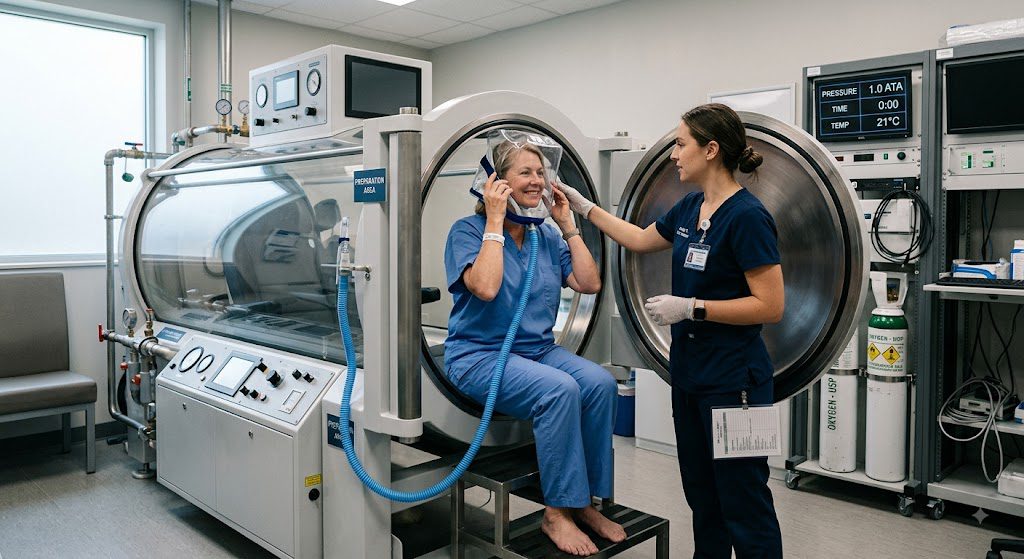
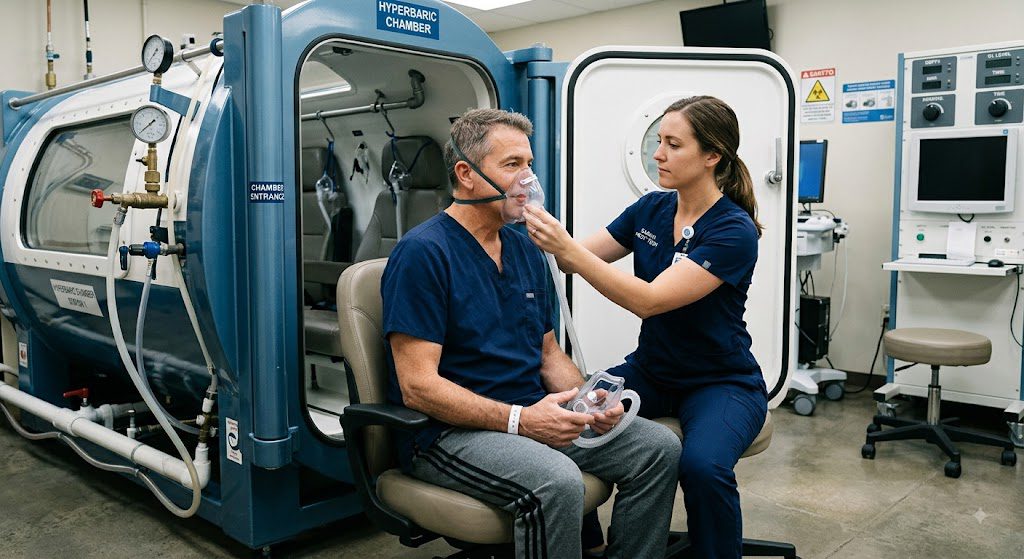
A typical HBOT session involves entering a hard-sided chamber where the patient breathes medical-grade oxygen while the pressure is gradually increased. UHMS states that treatments commonly last about 90 to 120 minutes, although the exact schedule depends on the condition being treated and the physician’s protocol.
Patients remain awake during treatment and can usually communicate with the staff. The pressure change may cause a feeling of fullness or popping in the ears, similar to what happens during an airplane flight.
Learning how to clear the ears before the first session can make treatment more comfortable. The hyperbaric team will explain techniques such as swallowing, yawning, or other pressure-equalizing methods.
How Many HBOT Treatments Will Be Needed?
The number of HBOT sessions varies by diagnosis and response to treatment. Radiation-related injuries can require a course of repeated sessions rather than one or two visits.
Patients should not assume that everyone receives the same number of treatments. The hyperbaric physician will monitor the affected area and overall progress throughout the course. UHMS notes that some radiation cystitis patients, for example, may require substantially more treatments than others.
This is also why attending scheduled treatments matters. Missing sessions can interrupt the treatment plan and make it harder for the care team to assess progress consistently.
What Should Patients Avoid Before HBOT?
Patients should follow the center’s instructions about food, medications, skin products, and personal items before entering the chamber. Certain products or materials may not be permitted because HBOT involves a high-oxygen environment.
Do not bring unapproved electronic devices, flammable materials, aerosols, or personal items into the chamber. The facility will provide specific instructions about what can and cannot be taken inside.
Smoking can also interfere with care. Nicotine causes blood vessels to narrow, which can work against the goals of treatment for injured tissue. Patients should discuss smoking and nicotine use openly with their medical team rather than stopping or changing medications on their own.
Does HBOT Mean the Radiation Damage Is Gone?
No. HBOT supports the treatment of radiation-related tissue injury, but it does not erase the history of radiation exposure. Delayed radiation injuries can involve complex changes in previously treated tissue, and some patients need surgery, wound care, dental treatment, antibiotics, or other medical care alongside HBOT.
UHMS specifically notes that delayed radiation injury, particularly when bone is involved, may require multidisciplinary treatment. HBOT should be viewed as one part of the care plan when clinically appropriate.
Patients should also understand that HBOT is not a treatment for cancer itself. Questions about cancer status, recurrence, or additional cancer treatment should be addressed with the patient’s oncology team.
People Also Ask
Is HBOT Safe After Radiation Treatment?
HBOT is an established treatment for delayed radiation injury, but it is not appropriate for every patient. A qualified hyperbaric physician should review the patient’s medical history, current condition, and treatment needs before therapy begins.
How Long After Radiation Can HBOT Be Used?
Delayed radiation injuries may appear six months or more after radiation and can sometimes develop years later. HBOT may be considered when a documented delayed radiation injury is present; there is no single waiting period that applies to every patient.
Can HBOT Treat Radiation Cystitis?
HBOT is used for some radiation-related injuries involving the bladder, including radiation cystitis. The appropriate treatment plan depends on the patient’s diagnosis and clinical findings, and treatment may require multiple sessions.
Does HBOT Replace Surgery for Radiation Injury?
Not necessarily. Some radiation injuries, especially those involving damaged or dead bone, may require surgery or other conventional treatment in addition to HBOT. UHMS recommends a multidisciplinary approach for many significant radiation injuries.
Will Insurance Pay for HBOT After Radiation?
Coverage depends on the diagnosis and insurance plan. Medicare specifically includes osteoradionecrosis and soft tissue radionecrosis among covered HBOT conditions when the therapy is used as an adjunct to conventional treatment.
Preparing for the Next Step
Preparing for HBOT after radiation treatment means understanding why the therapy has been recommended, following safety instructions, keeping appointments, and confirming insurance requirements before treatment begins. For patients with documented radiation-related tissue injury, HBOT may be an important part of a broader treatment plan.
Nature’s Healers provides hyperbaric oxygen therapy for appropriate medical indications and can help patients understand what to expect during the HBOT process. Contact us to discuss your treatment needs and whether HBOT may be appropriate for your radiation-related injury.
